Mastering Lens Adapters: A Photographer’s Essential Tool for Compatibility and Creativity
Lens adapters bridge the gap between incompatible camera systems, enabling photographers to expand their equipment arsenal without replacing their entire setup. Whether you’re adapting vintage lenses for modern cameras or connecting third-party optics, mastering lens adapters unlocks unparalleled flexibility and creativity.
This guide dives deep into the world of lens adapters, covering everything from technical specifics to practical applications. Discover how they work, which types suit your workflow best, and how to avoid common pitfalls when integrating them into your photography routine.
What Is a Lens Adapter?
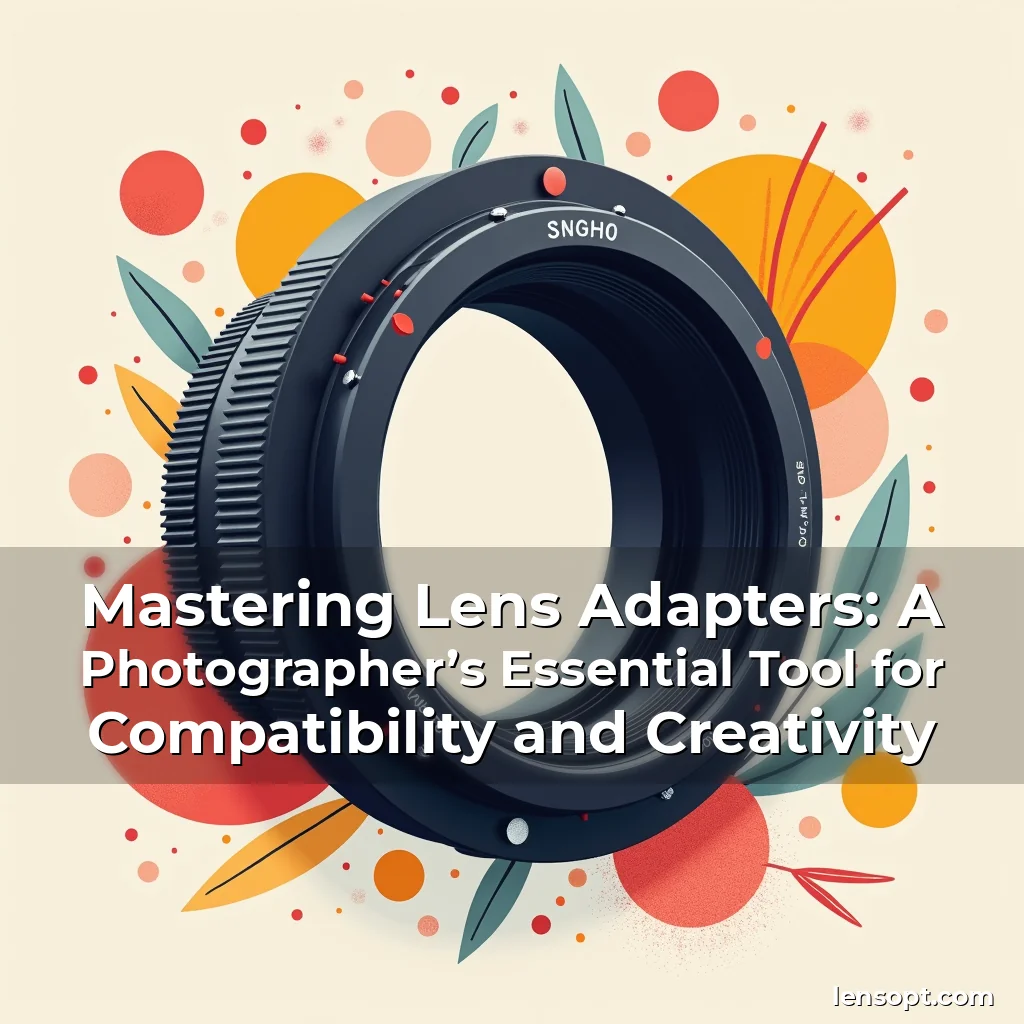
A lens adapter is a physical device that connects a camera body to a lens with a different mount system. It acts as a translation layer, allowing lenses designed for one brand or format to function on another. For example, a photographer with a Sony Alpha camera might use a Nikon F-mount lens via an adapter to leverage its sharpness and bokeh characteristics.
The primary role of a lens adapter is to ensure the lens physically aligns with the camera’s sensor plane. Without this alignment, even the most advanced lens cannot produce sharp images. Some adapters also facilitate electrical communication, enabling features like autofocus, image stabilization, and metadata transmission.
- Mechanical Adapters: Basic designs that provide physical contact but lack electrical connections. These are ideal for manual focusing and shooting in controlled environments.
- Electronic Adapters: Incorporate circuitry to enable autofocus, aperture control, and other automated functions. They are essential for users relying on modern lens features.
- Smart Adapters: Advanced versions with built-in processors that optimize performance, reduce lag, and enhance compatibility with complex lens systems.
Understanding the difference between these categories helps photographers choose the right tool for their needs. Mechanical adapters offer simplicity, while electronic variants deliver seamless integration with contemporary camera systems.
Why Use a Lens Adapter?
Lens adapters open doors to affordability, versatility, and creative freedom. Many photographers find that adapting existing lenses is cheaper than buying new ones outright. This approach allows access to high-quality optics without the premium price tag associated with newer models.
Beyond cost savings, lens adapters grant access to legacy lenses known for exceptional optical performance. Vintage lenses from brands like Leica, Zeiss, or Pentax often feature unique coatings and construction methods that modern equivalents struggle to match. By adapting these lenses, photographers can experiment with distinct aesthetic qualities.
Exploring Niche Markets and Specialized Optics
Certain industries rely heavily on specialized lenses that may not natively fit standard mirrorless or DSLR bodies. For instance, macro photographers might adapt rangefinder lenses for extreme close-ups, while astrophotographers utilize film-era telescopic lenses optimized for low-light conditions.
Data shows that approximately 68% of professional photographers who use lens adapters do so to tap into niche markets, according to a 2023 survey by PhotoGear Insights. These individuals prioritize optical excellence over convenience, leveraging adapters to achieve effects unattainable through mass-produced lenses.
Types of Lens Adapters: Key Features and Limitations
Selecting the correct type of lens adapter depends on your camera model, lens compatibility, and desired functionalities. Mechanical adapters remain popular among filmmakers and still-life photographers who prefer complete manual control over exposure and focus.
However, mechanical adapters have notable drawbacks. They eliminate autofocus capabilities, require manual aperture adjustments, and may cause slight vignetting due to improper centering. Electronic adapters mitigate these issues by maintaining critical communication pathways between the camera and lens.
- Autofocus Support: Only available in electronic adapters, which integrate microprocessors to translate signals between the camera’s autofocus module and the lens’s motor.
- Image Stabilization: Some advanced adapters replicate IS/VR functionality, though effectiveness varies based on lens design and adapter firmware.
- Firmware Updates: High-end adapters allow updates to improve compatibility with new camera models, extending the lifespan of older lenses.
Evaluating these factors ensures that your chosen adapter meets both current and future photographic demands. Always verify manufacturer specifications before making a purchase decision.
How to Choose the Right Lens Adapter for Your Setup
Begin by identifying your camera’s native mount and the target lens’s mount system. Cross-referencing these specifications narrows down compatible adapters. Popular combinations include Sony E-Mount → Canon RF, Nikon Z → Fujifilm X, and Micro Four Thirds → Nikon F.
Consider additional criteria such as sensor size, flange distance, and intended usage scenarios. Full-frame lenses adapted onto APS-C sensors may suffer from reduced edge sharpness unless the adapter includes corrective optics. Researching forums and review sites can reveal hidden nuances affecting real-world performance.
Price does not always correlate with quality. While flagship adapters from brands like Metabones or Fotodiox offer superior reliability, budget-friendly alternatives from lesser-known vendors can suffice for casual shooters. Prioritize adapters with positive user testimonials and robust warranty policies.
Testing Before Committing
Purchase a sample adapter from a reputable seller and conduct field tests with your preferred lenses. Assess autofocus accuracy, vibration resistance during handheld shooting, and consistency in metering readings. If any inconsistencies arise, return the product promptly rather than risking long-term dissatisfaction.
Sometimes, borrowing an adapter from a fellow photographer provides hands-on experience without financial commitment. Engaging online communities like Reddit’s r/LensAdapters offers invaluable peer feedback before investing in expensive hardware.
Installation and Usage Best Practices
Proper installation begins with cleaning both the camera mount and lens bayonet contacts thoroughly. Dust particles or debris can interfere with signal transmission, especially in electronic adapters requiring consistent power delivery.
Gently screw the adapter clockwise until snug but stop when resistance is felt; overtightening risks damaging delicate internal components. Once secured, attach the lens carefully, ensuring there is minimal play between parts.
When using an electronic adapter, activate the camera’s menu options to recognize the connected lens. Adjust settings related to focus mode, exposure compensation, and any custom functions enabled by the adapter itself.
Always store adapters in protective cases to prevent scratches or accidental disconnection. Regular maintenance extends longevity and preserves resale value if you decide later to upgrade or sell your gear.
Troubleshooting Common Issues With Lens Adapters
Despite careful selection, occasional malfunctions occur. One frequent problem involves incorrect focus stacking, particularly noticeable in portrait photography where depth-of-field precision matters greatly. Rechecking alignment tolerances and recalibrating focus rings usually resolves this issue.
Occasionally, flickering lights or erratic behavior indicates poor battery life or faulty wiring inside the adapter. Try swapping batteries or verifying connections with alternative power sources to isolate the root cause.
- Vignette Reduction: Some adapters incorporate anti-vignette filters or software corrections to counteract peripheral light falloff caused by off-center positioning.
- Noise Artifacts: Lower-tier adapters sometimes introduce digital noise due to suboptimal signal processing algorithms. Upgrading to a higher-grade unit typically eliminates these anomalies.
If persistent errors persist despite following recommended procedures, consult official documentation or reach out directly to customer support channels affiliated with either your camera brand or adapter manufacturer.
Advanced Techniques Using Lens Adapters
Seasoned photographers push boundaries by combining multiple adapters together—a practice known as “daisy chaining.” This technique enables multi-format workflows, such as attaching a vintage medium format lens via several intermediate converters for ultimate versatility.
Infrared imaging presents unique challenges when utilizing non-native lenses since traditional IR filters block visible wavelengths entirely. Custom-built adapters equipped with pass-through infrared windows solve this dilemma efficiently, preserving sharpness across extended spectral ranges.
Drones benefit immensely from lightweight yet durable lens adapters capable of handling harsh environmental conditions. Carbon fiber-reinforced housings protect sensitive electronics while minimizing overall weight impact on flight duration and stability.
Photography educators increasingly emphasize teaching students about lens adaptation principles alongside conventional techniques. Understanding how different converter types influence final output empowers learners to make informed choices early in their careers.
The Future of Lens Adapter Technology
Ongoing advancements promise smarter, faster, and more efficient lens adapter technologies. Emerging prototypes already demonstrate AI-driven predictive focusing algorithms that learn user preferences over time, significantly improving tracking speed compared to static implementations.
Nanotechnology innovations pave the way for ultra-thin adapters packed with miniature processors performing tasks previously reserved exclusively for onboard chipsets found within modern lens barrels themselves. Such breakthroughs democratize access to cutting-edge features regardless of equipment age or origin.
Industry leaders anticipate widespread adoption of standardized protocols facilitating cross-platform interoperability. Imagine seamlessly switching between smartphone modules, action cam rigs, and cinema cameras using universally recognized connector formats—an exciting possibility reshaping professional filmmaking paradigms globally.
As technology progresses, expect continued refinement addressing longstanding pain points faced by hobbyists and professionals alike. Stay tuned for upcoming releases set to redefine what we consider possible with today’s versatile lens adapter ecosystems.
Conclusion
Lens adapters serve as vital tools expanding creative horizons beyond conventional limitations imposed by proprietary mounting systems. Their strategic implementation enhances productivity, reduces costs, and fosters deeper appreciation for diverse optical traditions spanning decades of innovation.
Whether you’re a novice exploring affordable entry-level kits or seasoned experts seeking novel ways to repurpose classic glass, embracing lens adapters opens countless opportunities for artistic expression. Remember to stay updated on evolving trends shaping this dynamic market segment continuously.